A century of politics and industry in a grand strategy simulator
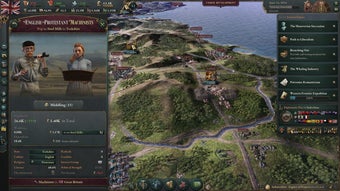
Victoria 3, from Paradox Development Studio, is a grand strategy society simulator that places the player in control of a nation from 1836 to 1936 to manage social and economic transformation. The game models populations and industrial networks while requiring lawmaking, diplomacy, and technological research to progress. Key systems include the 'Pop' population units, Diplomatic Plays, and a prestige and research ladder. It suits grand strategy and history fans who prefer political management over battlefield focus.
What kind of game is this society simulator?
In this setting you steer a country through the industrial century with an emphasis on internal stability and material conditions. A central mechanic models individual population units called 'Pops', each with economic needs, political desires, and cultural identities. Decision-making revolves around satisfying or manipulating those groups to prevent unrest, making social policy and economic planning the primary levers of power rather than tactical combat.
Does it support multiplayer and political systems?
Multiplayer exists in competitive and cooperative formats alongside single-player campaigns. Political interactions pivot on Interest Groups such as Industrialists, Rural Folk, and the Devout; their support shapes a player's ability to pass laws and reforms. Diplomacy uses a Diplomatic Plays mechanic that lets players extract concessions through negotiation, threats, or bluffs, offering alternatives to open warfare and encouraging strategic bargaining at the state level.
Is it hard to get started?
New players face a steep learning curve because economic chains, population dynamics, and political mechanics interlock across systems. User feedback highlighted mixed feelings about simplified warfare mechanics compared with other Paradox titles, which places greater emphasis on policy than battlefield tactics. Hardware is also a gate: the game requires a processor with AVX support, so older CPUs cannot run it without compatible instructions.
What drives replayability across sessions?
Replay value stems from the century-spanning timeline and the number of playable nations, more than one hundred at the start, which let players pursue distinct development strategies. Research unlocks social, economic, and military technologies that alter long-term options. Prestige and Great Power ranking supply a geopolitical race for influence, while industrialisation and global trade networks create different economic paths that encourage varied long-form campaigns.
Best for players prepared to commit time to long-form political strategy
The game rewards players who accept sustained campaigns and careful micromanagement, offering layered strategic choices across decades. Expect a significant time investment and detailed administration; those seeking short matches or immediate battlefield action may find the pacing unsuitable. For players who enjoy persistent nation-building, methodical policy experiments, and long campaigns, it provides a deep platform to explore.